South Africa today is one of the most diverse countries in the world. People from many different cultural backgrounds live side by side, and the country has 11 official languages, including Zulu, Xhosa, Afrikaans and English. This diversity can be seen in everyday life – in music, food, clothing, religion and celebrations.
Many South Africans are proud of their culture and identity. Music and dance play an important role, from traditional songs to modern styles like hip-hop and amapiano. Sport is also very important, and football and rugby bring people together across the country. Young people in South Africa are connected to global culture through social media, fashion and technology, while still keeping strong local traditions.
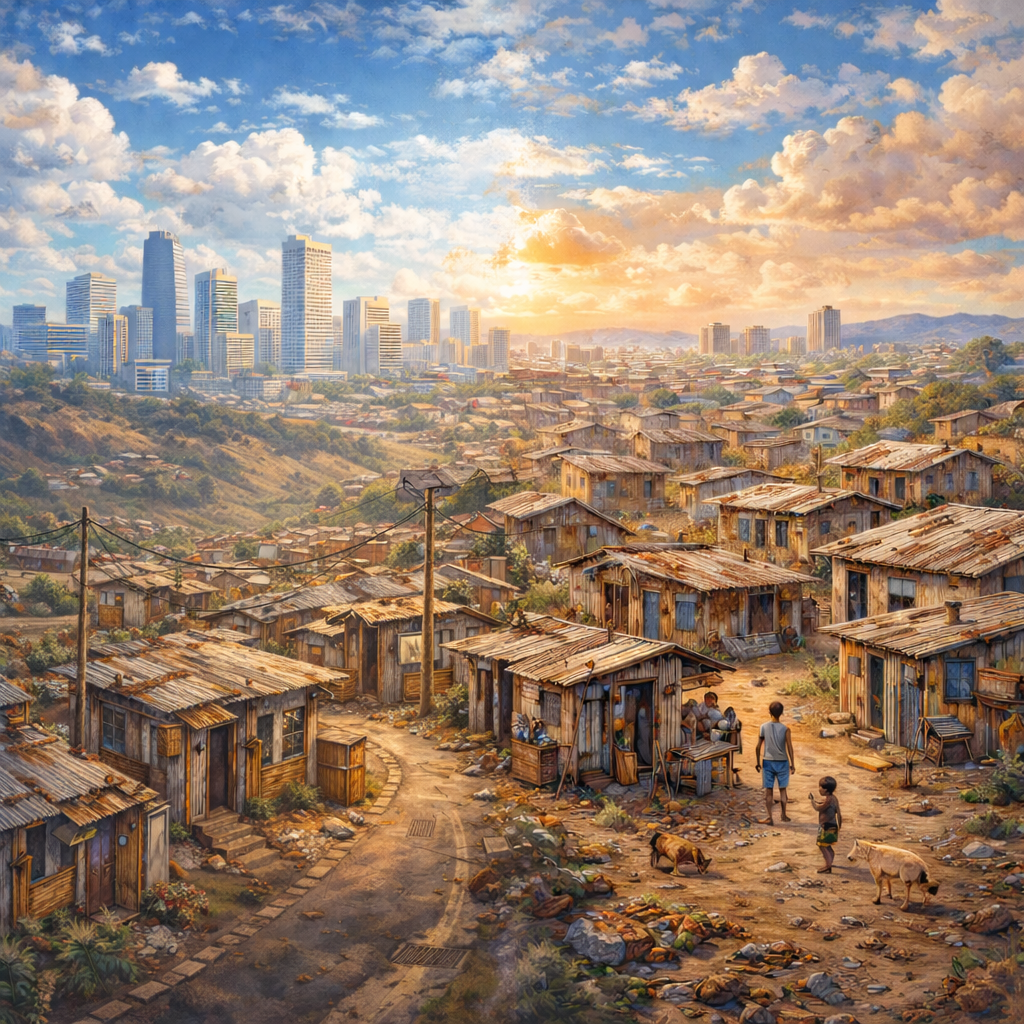
At the same time, South African society shows clear contrasts. Some people live in modern houses in cities, while others live in townships or rural areas with fewer resources.
Townships – Community, Culture and History
One important part of South African society is the township. Townships are residential areas that were originally created for Black South Africans and other non-white groups. Many townships are located outside city centres.
During the 20th century, especially under Apartheid, people were forced to live in townships and were not allowed to choose where they wanted to live. These areas often had fewer schools, hospitals and job opportunities than white areas.
Today, millions of people still live in townships. Life there can be difficult, but townships are also known for strong communities, creativity and resilience. Neighbours often support each other, and townships have had a strong influence on South African culture. Music, art, fashion and political activism have grown out of township life, and many famous South Africans grew up there.
From History to Apartheid
To understand why South Africa looks the way it does today, we need to look back at its history. Before Europeans arrived, southern Africa was home to many indigenous peoples with their own languages, traditions and ways of life. Communities were often built around family, storytelling and close social ties.
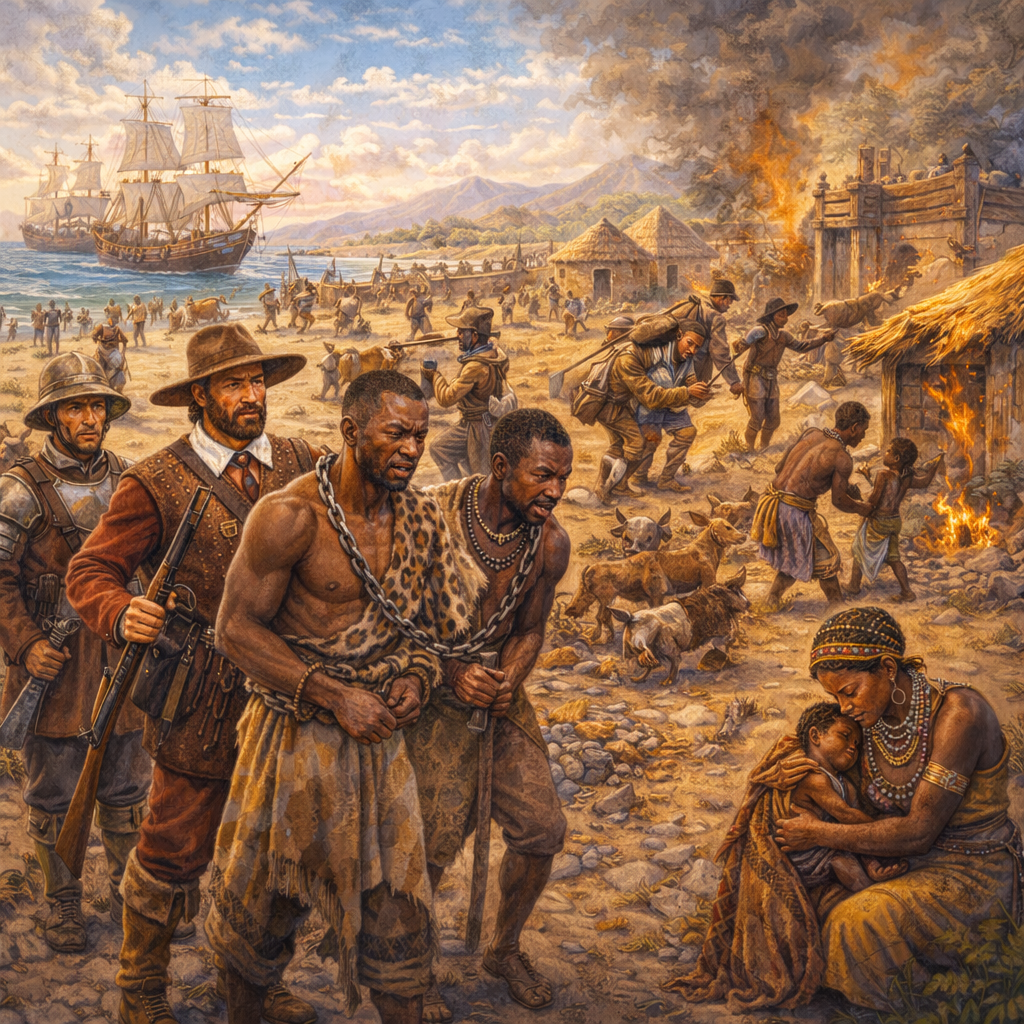
This changed when Europeans began to settle in the area. The Dutch arrived first, followed later by the British. They brought new languages, Christianity and European systems of education and government. Over time, European settlers took control of large areas of land and important resources such as farms and mines.
This created inequality. European settlers gained power and wealth, while many African people were forced into low-paid work. Society slowly became divided, with different groups living separate lives. European culture was often seen as more important than African cultures, and separation became normal in everyday life.
Long before any official laws were introduced, racial separation already existed in society. Race and culture were used to explain why some people had more rights and opportunities than others. In 1948, this separation was turned into official policy when Apartheid became the law of South Africa.
To do
Read the text and watch the videos.
In your document, write down key information, that you feel are or might be important to know. From the text and the videos.
Find five words that you feel are hard to understand. Write these words in your document and write three sentences to each of the words.