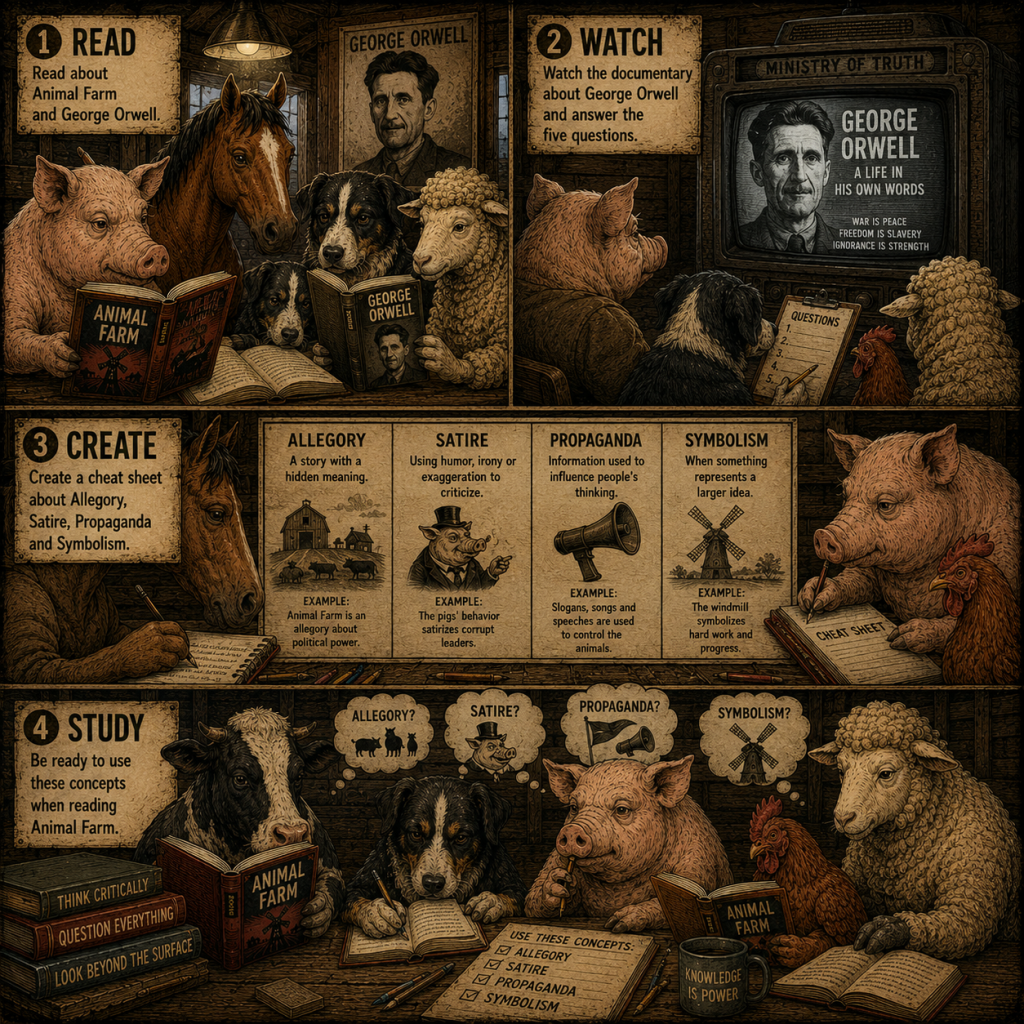
Animal Farm is a novella written by George Orwell and published in 1945. A novella is shorter than a novel but longer than a short story.
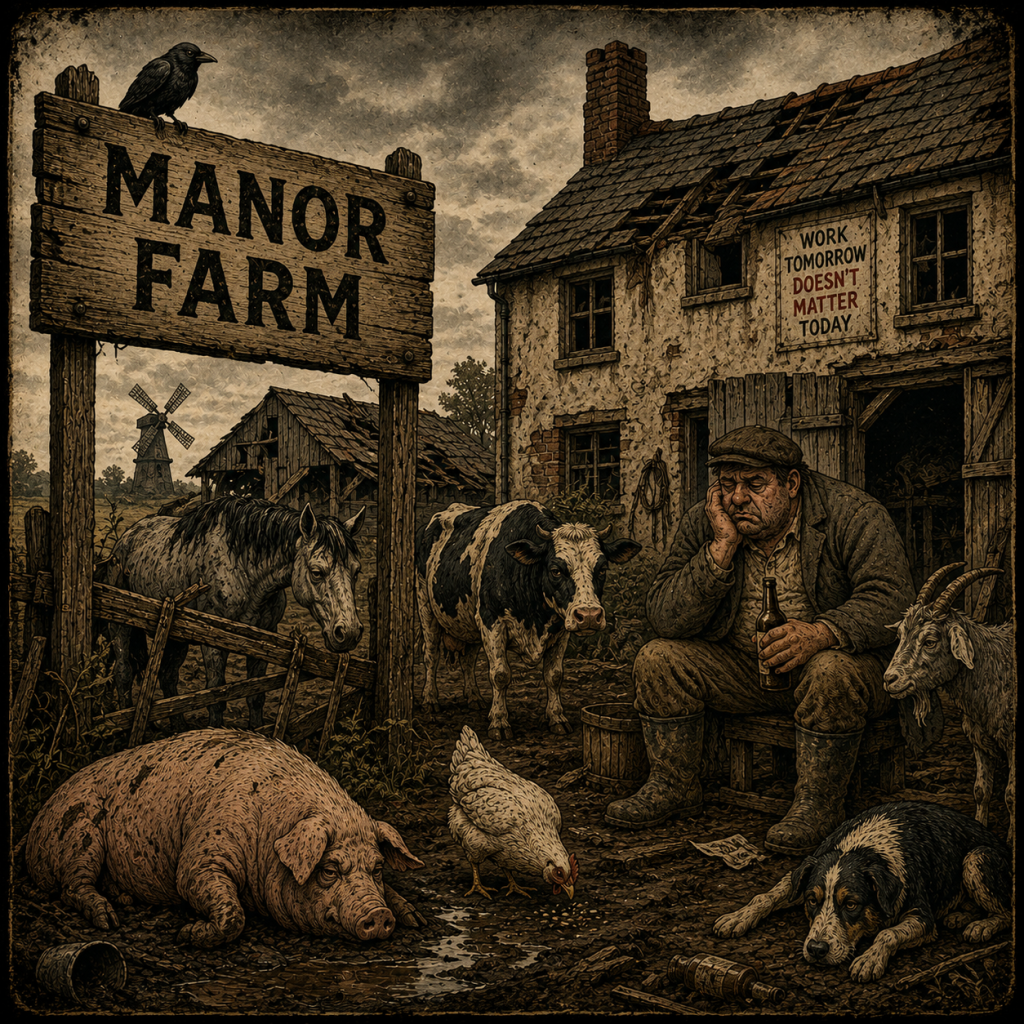
The story begins on Manor Farm, where the animals are unhappy with their owner, Mr Jones. Inspired by the ideas of an old pig named Old Major, they decide to rebel and create a society where all animals are equal. However, as the story develops, some animals begin to gain more power than others, and the dream of equality starts to change.
Although Animal Farm is a story about animals, Orwell wrote it to explore important ideas about power, leadership, equality, and freedom.
George Orwell
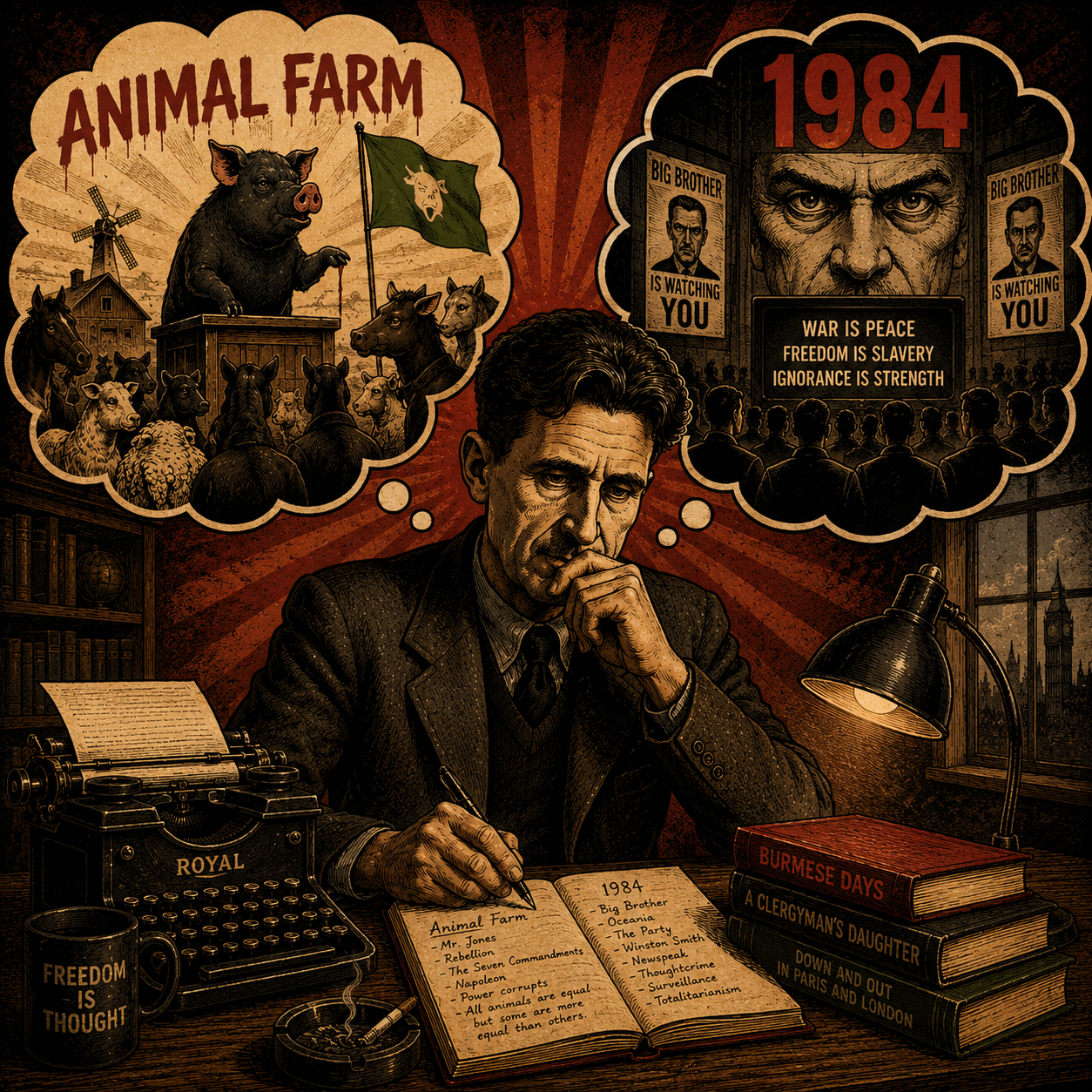
George Orwell (1903–1950) was an English writer and journalist. He is best known for Animal Farm and 1984, two books that explore how power can be used and abused.
Orwell was interested in politics and believed that people should think critically about leaders and governments. He worried that some leaders promised a better future but instead used fear, lies, and propaganda to gain control. These concerns inspired him to write Animal Farm.
Today, Orwell’s ideas are still relevant. Around the world, people continue to debate questions about power, leadership, truth, freedom, and the influence of media. Through Animal Farm, Orwell encourages readers to think critically about who has power, how they use it, and why people sometimes choose to follow leaders without questioning them.
Watch and answer the questions
While watching
Accordcing to the video from Reading Through History:
What was George Orwell’s real name?
What jobs did Orwell have before becoming a writer?
What topics interested Orwell?
Why did Orwell write Animal Farm?
Which other famous book did Orwell write?
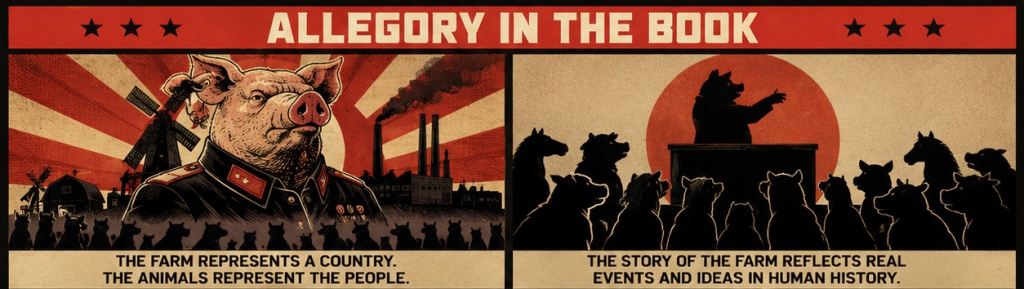
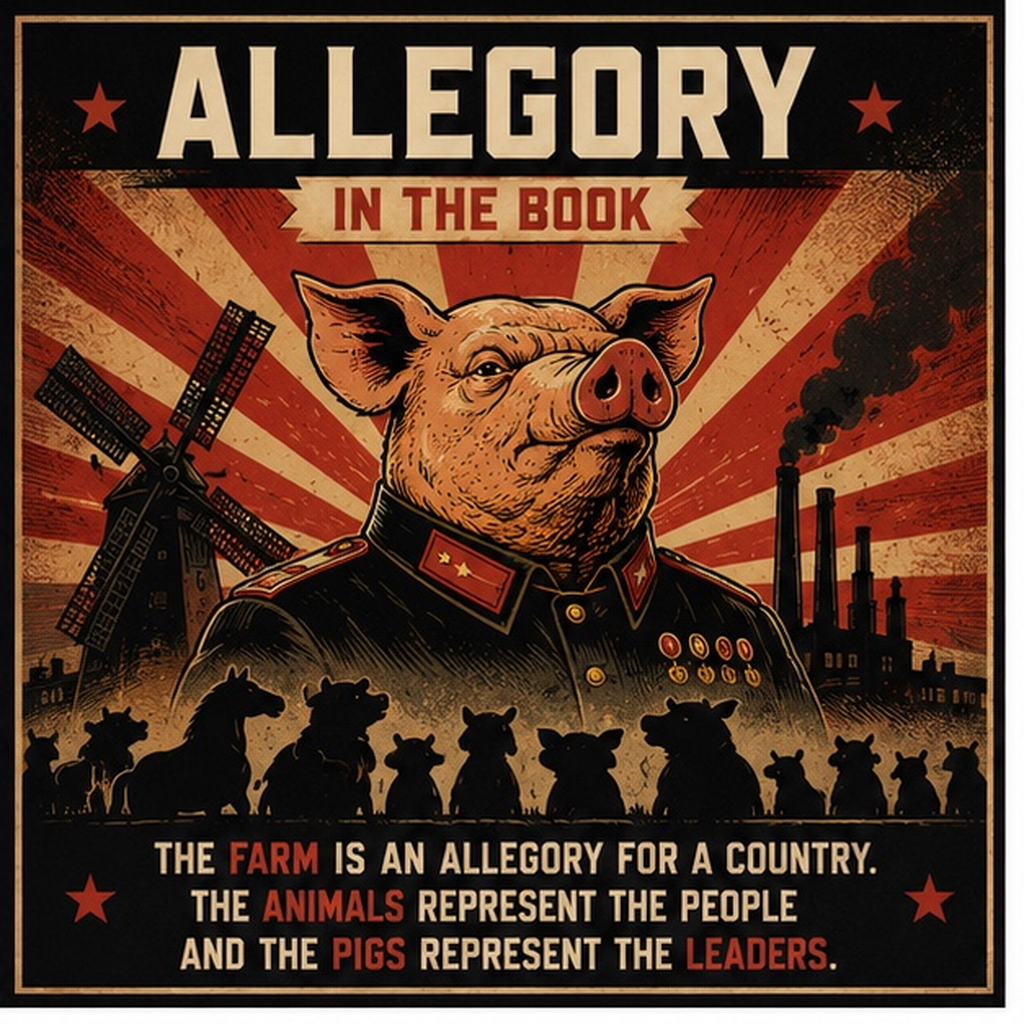
An allegory is a story in which characters, events, and settings represent something larger than themselves.
While Animal Farm is about animals living on a farm, Orwell uses the story to explore real ideas about society, politics, and power.
A modern example: In The Hunger Games, the story is not only about a competition where teenagers fight to survive. It can also be seen as a story about power, inequality, media influence, and how governments control people. Just as Animal Farm is about more than animals, The Hunger Games is about more than a survival game.
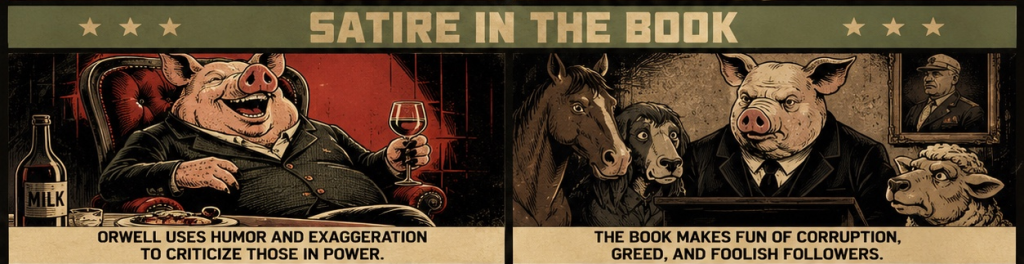
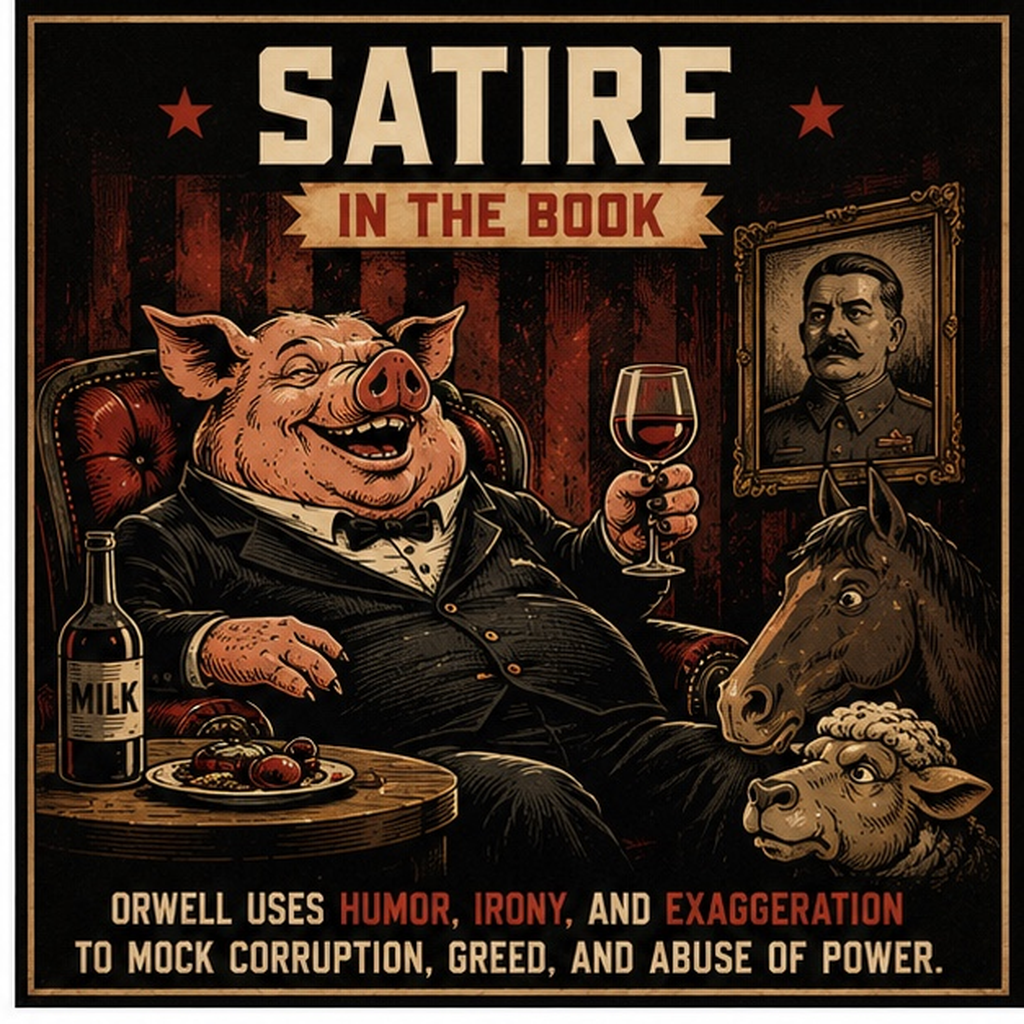
A satire uses humour, irony, exaggeration, or criticism to expose problems in society.
Orwell uses satire throughout Animal Farm to criticise corruption, greed, and the abuse of power.
A modern example: During recent conflicts, Iranian media created videos using Lego-style characters to portray political and military events. By exaggerating people and events, the videos attempted to mock opponents and influence public opinion. This is an example of satire because humour and exaggeration are used to make a political point.
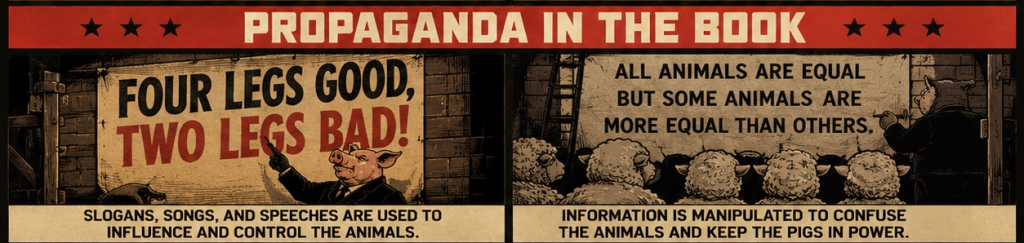
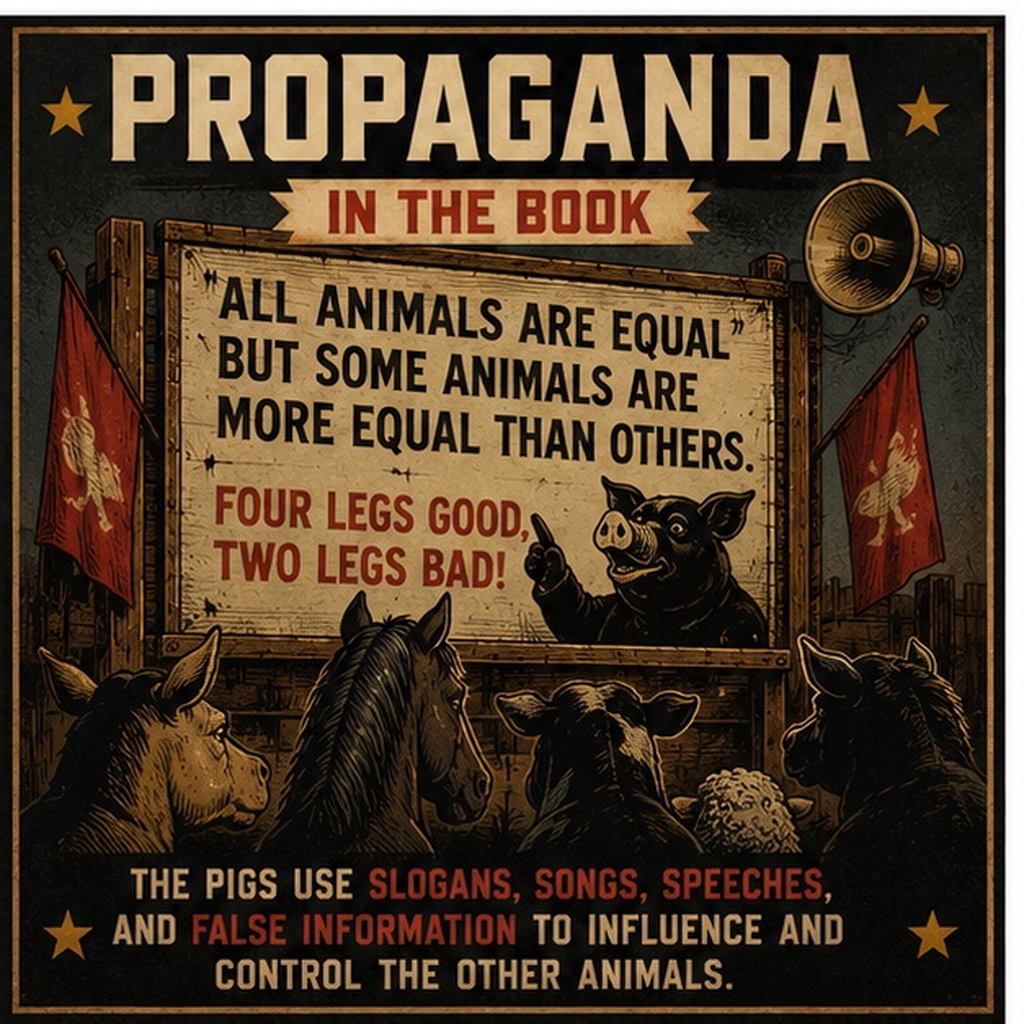
Propaganda is information used to influence how people think or behave.
In Animal Farm, some characters use speeches, slogans, songs, and carefully chosen information to influence the other animals and maintain control.
A modern example: During elections, political campaigns often create advertisements, videos, and social media posts designed to persuade people to support a particular candidate or party. Governments, organisations, and influencers may also use emotional messages, slogans, and selective information to shape public opinion. Propaganda often appeals to emotions such as fear, pride, or anger rather than encouraging people to examine all the facts.
As you read Animal Farm, pay attention to how language is used to persuade, influence, and control the animals.
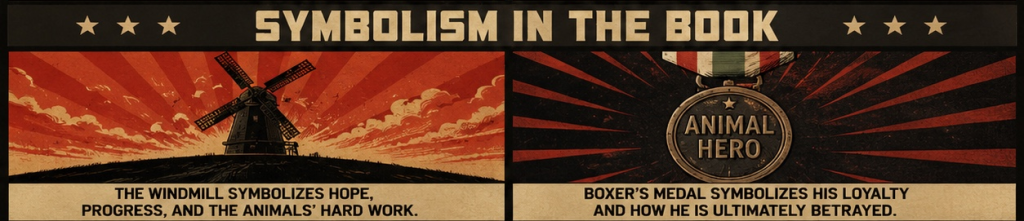
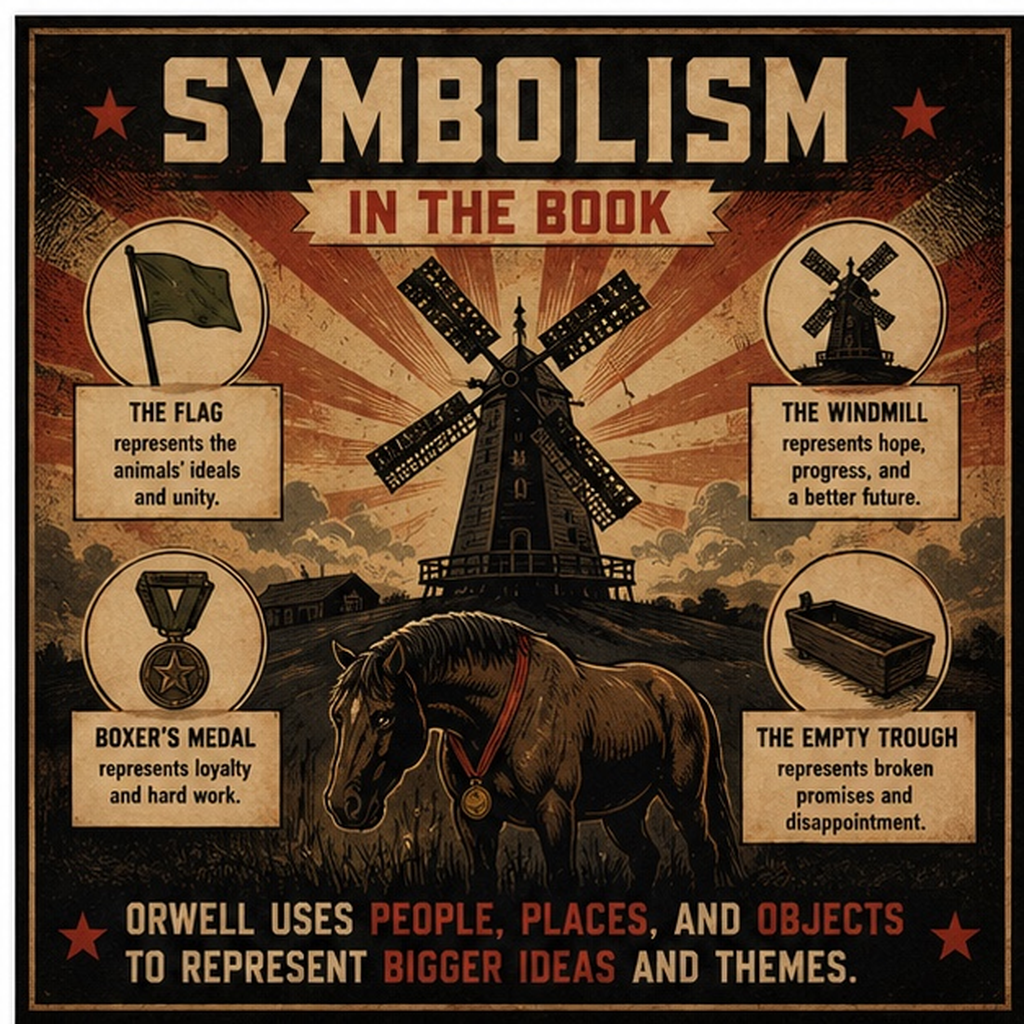
Symbolism is when a person, object, place, or event represents a larger idea.
Throughout the novella, Orwell uses characters, objects, and events to symbolise ideas such as leadership, loyalty, equality, and power.
A modern example: A country’s flag can symbolise national identity, a dove can symbolise peace, and a heart emoji ❤️ can symbolise love, friendship, or support. The object itself is simple, but it represents a larger idea.
While working with the text
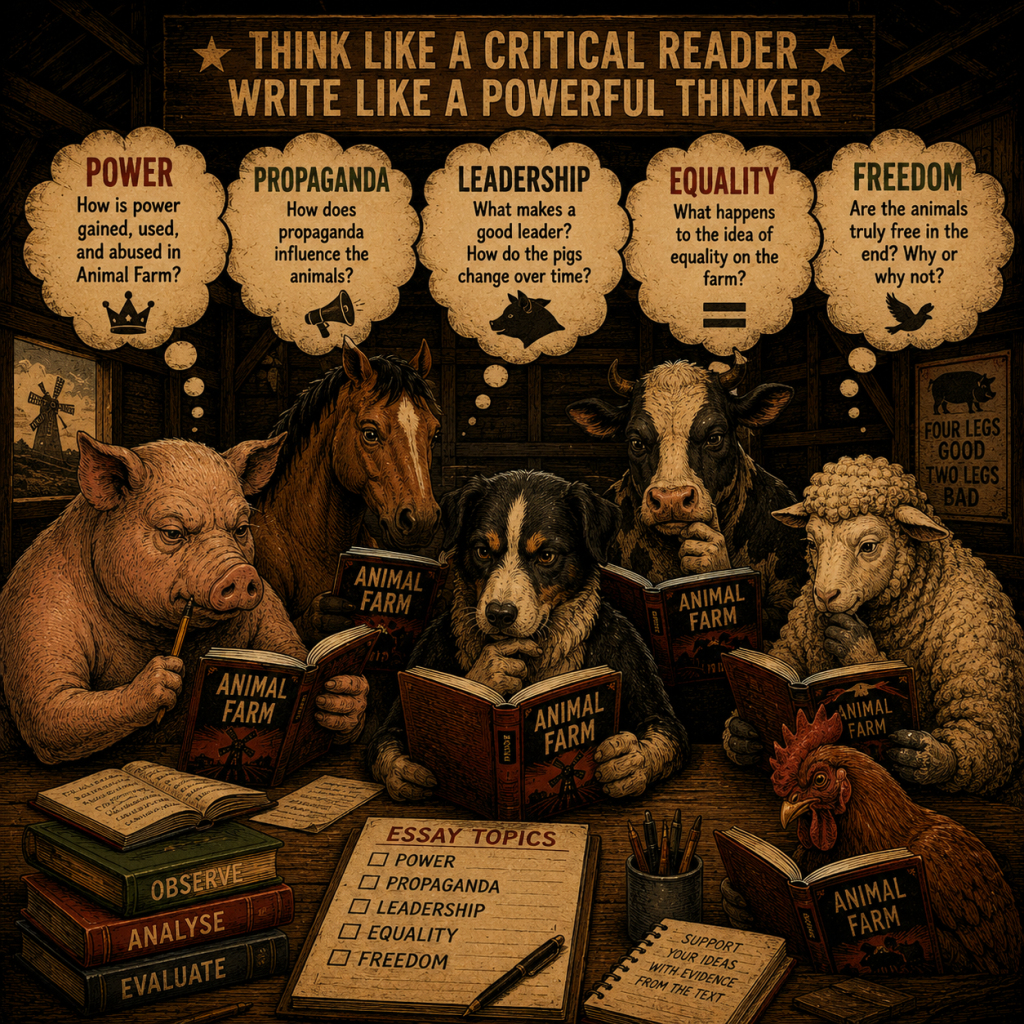
As you read, think about these questions:
How does power change the animals?
How is propaganda used throughout the story?
Which characters represent important ideas?
What message do you think Orwell wanted readers to learn?
For each chapter, you will answer comprehension questions and complete a Reading Between the Lines – Beyond the Barn reflection task in Exam.net.
By the end of the unit, you should be able to explain not only what happens in Animal Farm, but also what Orwell wanted readers to learn from it. You will also write an essay on one out of four topics.