
PUNISHMENTS THROUGH HISTORY
Punishments through history
Throughout history, societies have used many different ways to punish criminals. Some punishments were designed to create fear, some were meant to humiliate people, and others removed criminals from society altogether.
In this activity, you will read about seven different punishments from various time periods and parts of the world. As you read, complete the table for each punishment by identifying:
- Where and when was it used?
- What happened?
- Why was it used?
Once you have completed the chart, answer questions 1–5. After that, continue with questions 6–8, which ask you to connect what you have learned to modern punishment and prison systems.
Finally, answer the reflective question to summarise what you have learned about punishment throughout history.

Table for punishments
| Punishments | When/Where was it used? | What happened? | Why was it used? |
|---|---|---|---|
|
Ostracism |
|
|
|
|
The Brazen Bull |
|
|
|
|
Outlawry |
|
|
|
|
Stocks |
|
|
|
|
Scold’s Bridle |
|
|
|
|
Tarring and Feathering |
|
|
|
|
Transportation |
|
|
|
Punishments through history
Ostracism
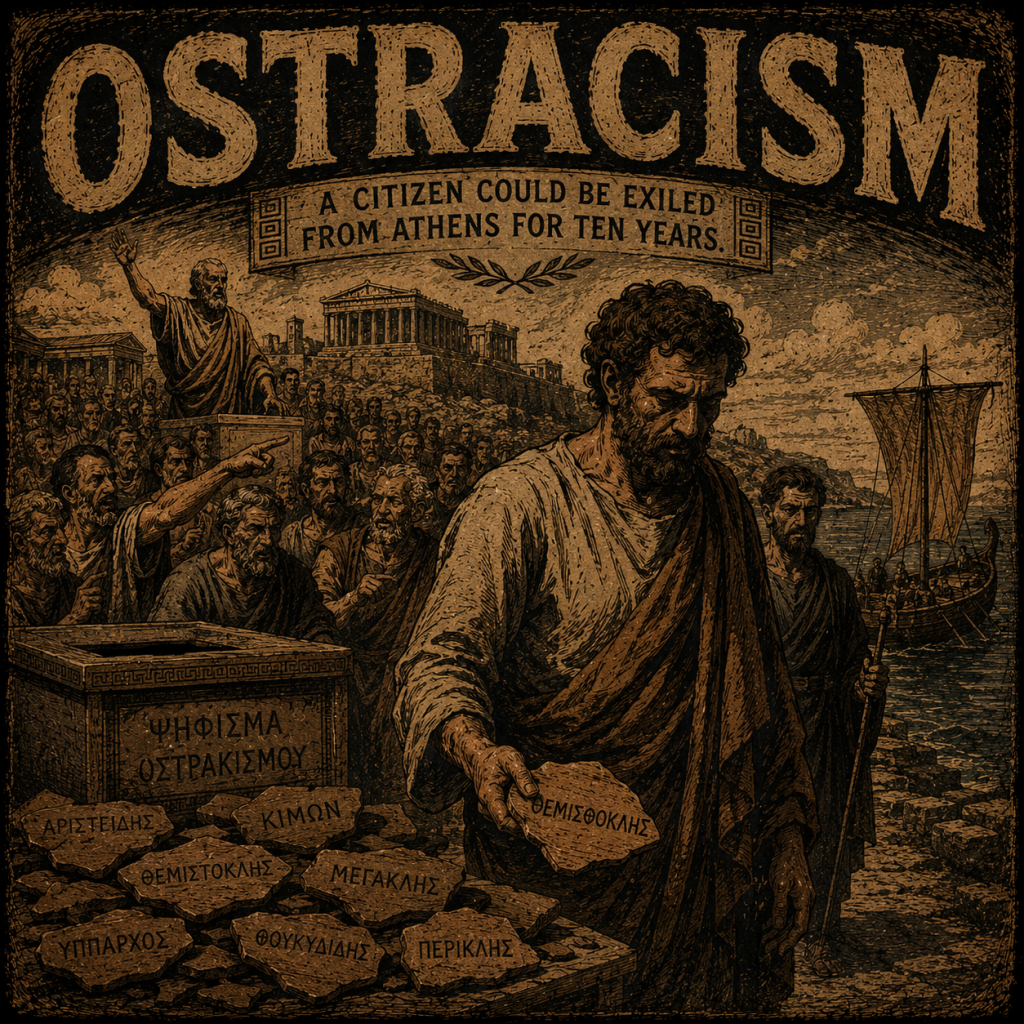
Ostracism was a punishment used in Ancient Athens. Once a year, citizens could vote to decide whether someone had become too powerful or dangerous. If enough people voted against a person, that individual was forced to leave Athens for ten years.
The person did not lose their property or citizenship, but they had to leave their family, friends and community behind. Ostracism was often used against politicians and military leaders rather than ordinary criminals.
The purpose of ostracism was to protect Athens from people who might threaten its democracy. Instead of putting someone in prison, the Athenians removed them from society.
The Brazen Bull
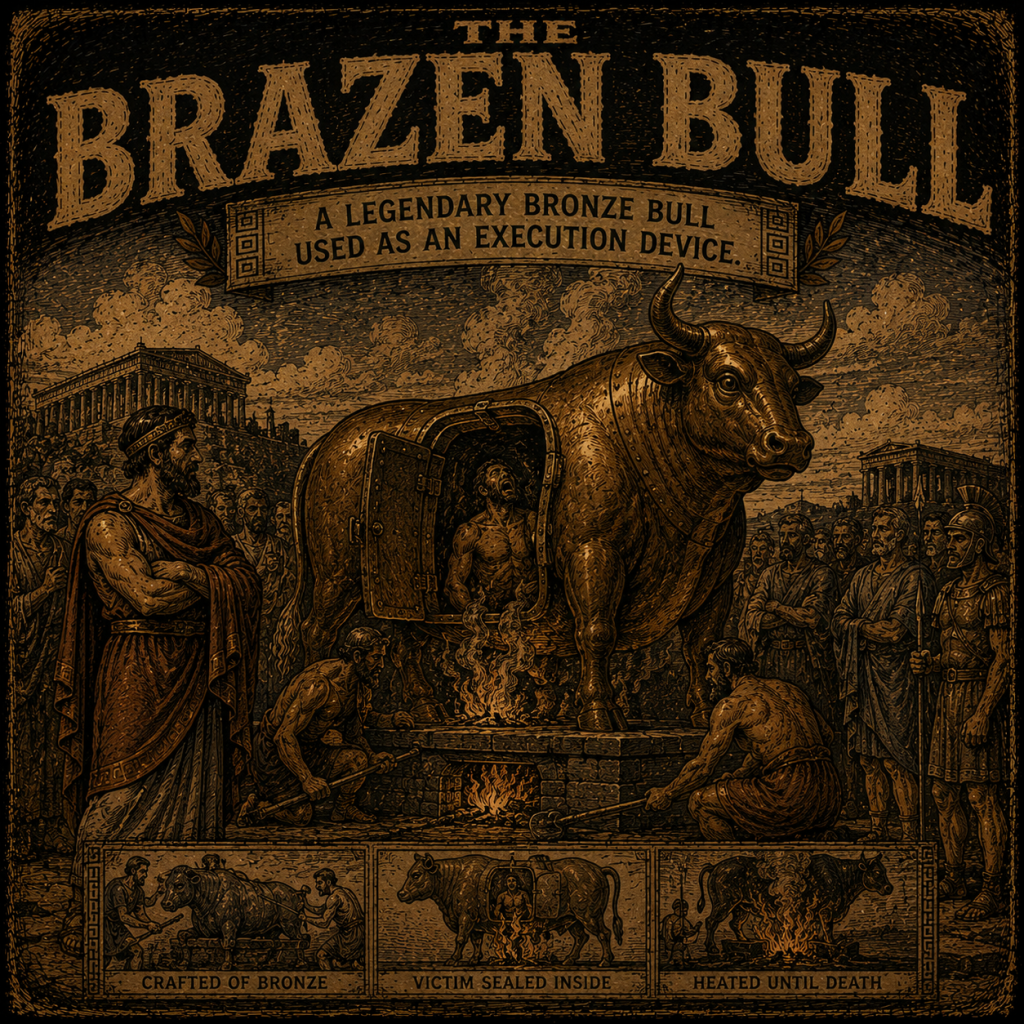
The Brazen Bull was a legendary punishment said to have been used in Ancient Greece. It was a large hollow bull made of bronze. According to the story, a person was locked inside the bull while a fire was lit underneath it.
As the metal became hotter and hotter, the person inside suffered greatly. Ancient writers claimed that the bull was designed so that the victim’s screams sounded like the noises made by a real bull.
Historians are not completely sure whether the Brazen Bull was actually used or if it became famous as a legend. However, the story shows how some rulers used fear to control people.
Outlawry
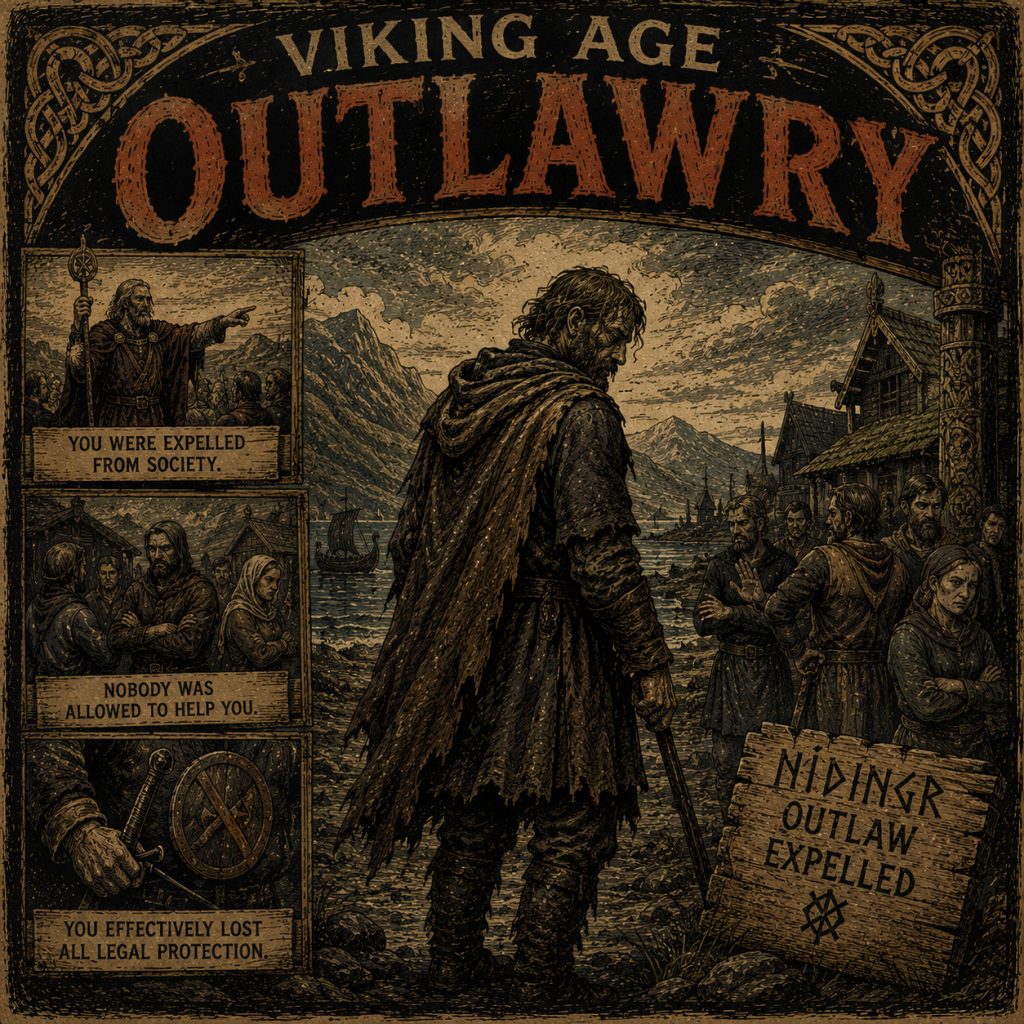
During the Viking Age, a person who committed a serious crime could be declared an outlaw. This meant that they were no longer protected by the law.
An outlaw was forced to leave their home and community. Nobody was allowed to help them, give them food or offer them shelter. In some cases, anyone who met the outlaw could attack or even kill them without being punished.
Outlawry was one of the harshest punishments in Viking society because it completely removed a person from the protection of society.
Stocks
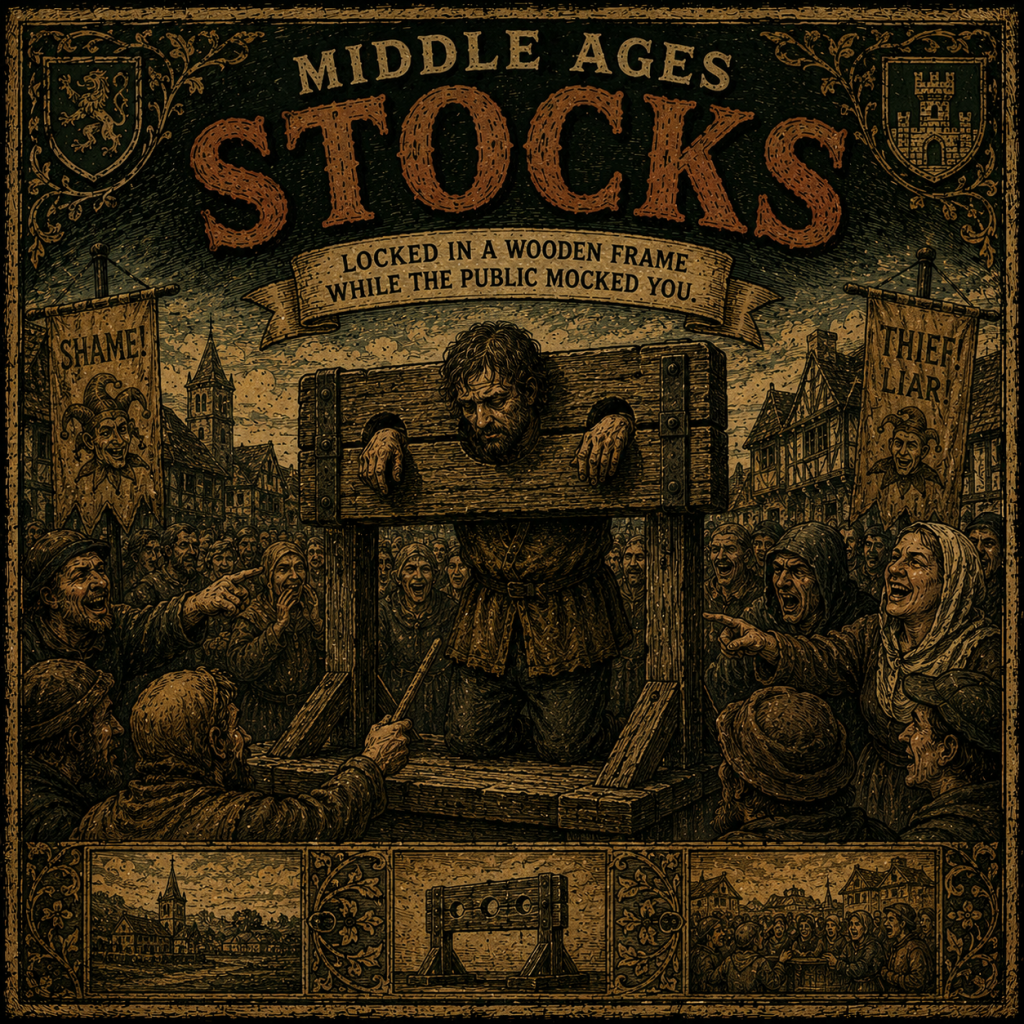
The stocks were a common punishment in medieval Europe. A person’s head and hands were locked into a wooden frame, usually placed in a public area such as a town square.
People walking past often laughed at the offender, insulted them or threw rotten fruit and vegetables at them. Criminals might remain in the stocks for several hours or even several days.
The purpose of the stocks was not only to punish the offender but also to shame them in front of the entire community. Public humiliation was considered an important part of the punishment.
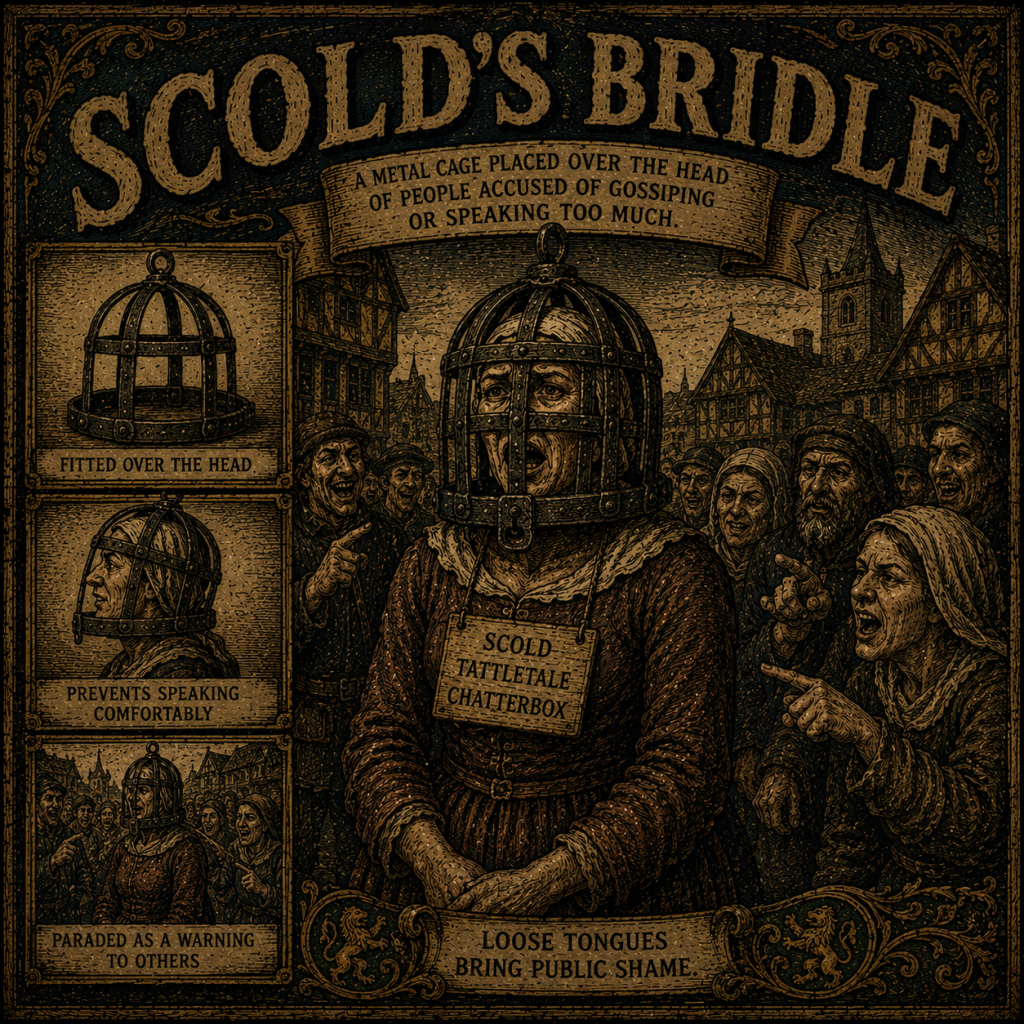
Scold’s Bridle
The Scold’s Bridle was a metal cage that was placed over a person’s head. It was most commonly used in Britain between the 1500s and 1700s.
The punishment was often given to people, especially women, who were accused of gossiping, arguing or causing trouble. The cage covered the head and sometimes included a metal piece that made speaking difficult or painful.
The Scold’s Bridle was designed to publicly shame people and control their behaviour. Today, many historians see it as an unfair punishment that was often used against women.
Tarring and Feathering
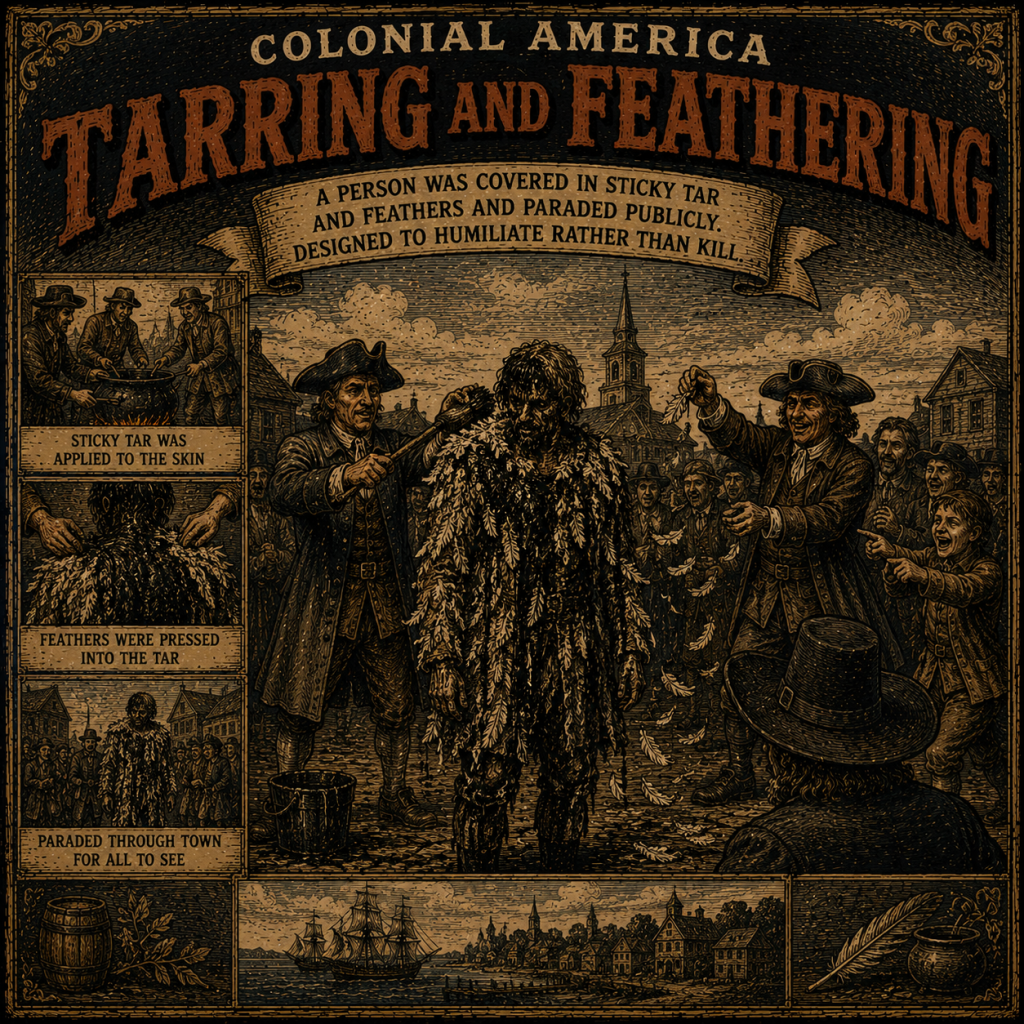
Tarring and feathering was a punishment used in Colonial America and other parts of the British Empire. A person was covered in sticky tar and then covered with feathers.
The offender was often paraded through the streets while crowds laughed, shouted and mocked them. Although the punishment was usually intended to humiliate rather than kill, it could still be painful and dangerous.
Tarring and feathering was often used against people who were unpopular or who had angered their local community. The punishment relied heavily on public shame.
Transportation to Australia
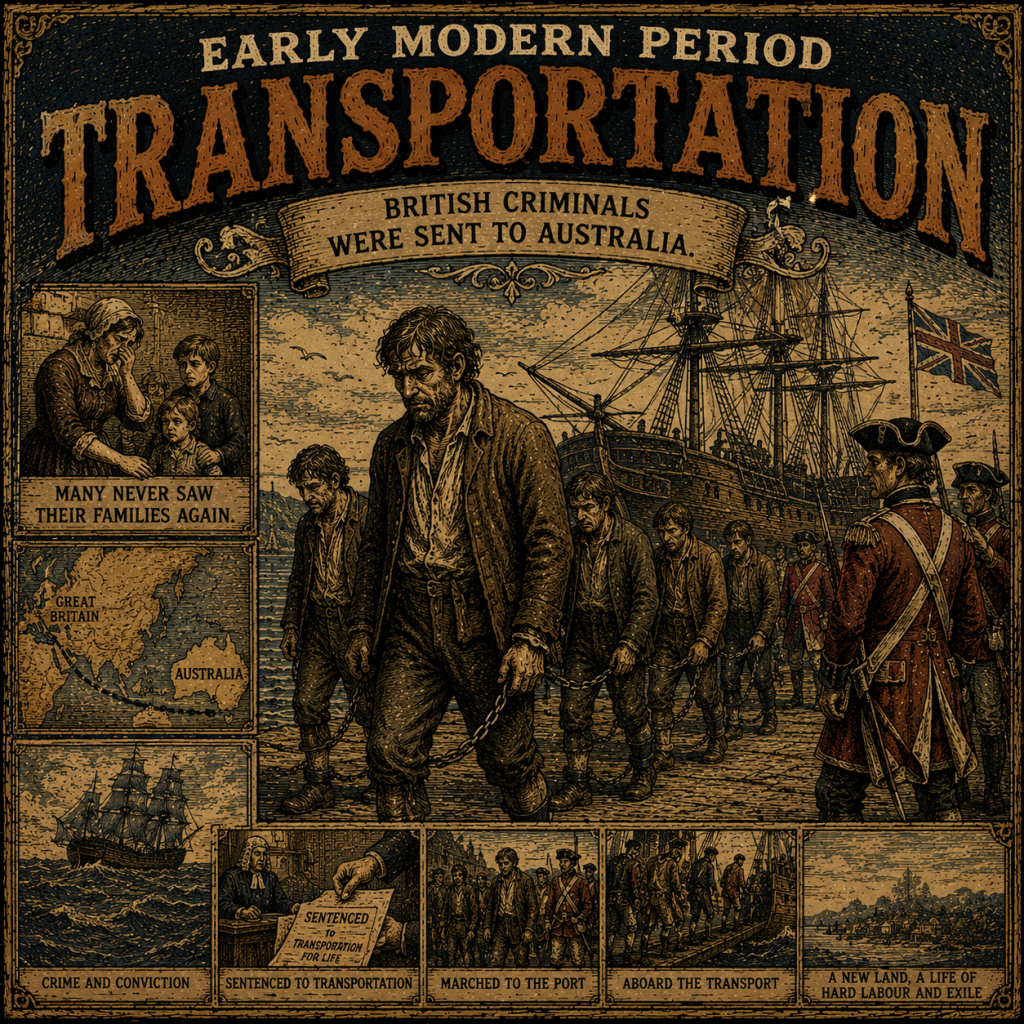
Between 1788 and 1868, Britain sent more than 160,000 convicted criminals to Australia. This punishment was known as transportation.
Criminals were forced to travel for months by ship to a country on the other side of the world. Once they arrived, many worked as labourers and were unable to return home for many years.
Transportation was used for a wide range of crimes, including theft. The British government believed that removing criminals from society would reduce crime and help develop the Australian colonies.
For many people, the hardest part of the punishment was being separated from their family, friends and homeland.
Understanding the Texts
- Which punishment do you think was the harshest?
- Which punishment do you think was the most unusual?
- Which punishment focused most on fear?
- Which punishment focused most on humiliation?
- Which punishment would you least like to receive? Explain why.
- Which of these punishments would be considered acceptable today?
- Why do you think most countries use prisons instead of these punishments today?
- Do you think prison should try to change people or simply punish them?
Reflective answer
One thing I learned about punishment through history is _______.
Use some of the following phrases in your answer:
- I learned that…
- One example is…
- This shows that…
- In the past…
- Today, many countries…
- Compared to today…
- In my opinion…
- I think the purpose of punishment should be…